
For decades, Hollywood has tried to crack the code to a good Resident Evil movie. When Constantin Films bought the rights to the video-game franchise in 1997, it seemed like an easy win. The Resident Evil games started off as a play on George Romero’s zombie films but with puzzles and action-oriented combat sprinkled between the horror. It shouldn’t be that hard to reverse-engineer them into a movie franchise like the ones that originally inspired game developer Capcom. Turns out, it was.
The Milla Jovovich-led films that were released from 2002-16 were box-office successes but only became more critically reviled by critics and fans alike as the franchise shuffled onward. Resident Evil: Welcome to Raccoon City (2021) traded the post-Matrix aesthetic of director Paul W.S. Anderson’s franchise for a more accurate depiction of the games, only to deliver a middling, forgettable entry. Because of Raccoon City’s critical and financial bombing, Constantin Films canceled its plans for sequels and returned to square one. Thankfully, their attempt at a second reboot shows better judgment. When all else fails, get Zach Cregger.
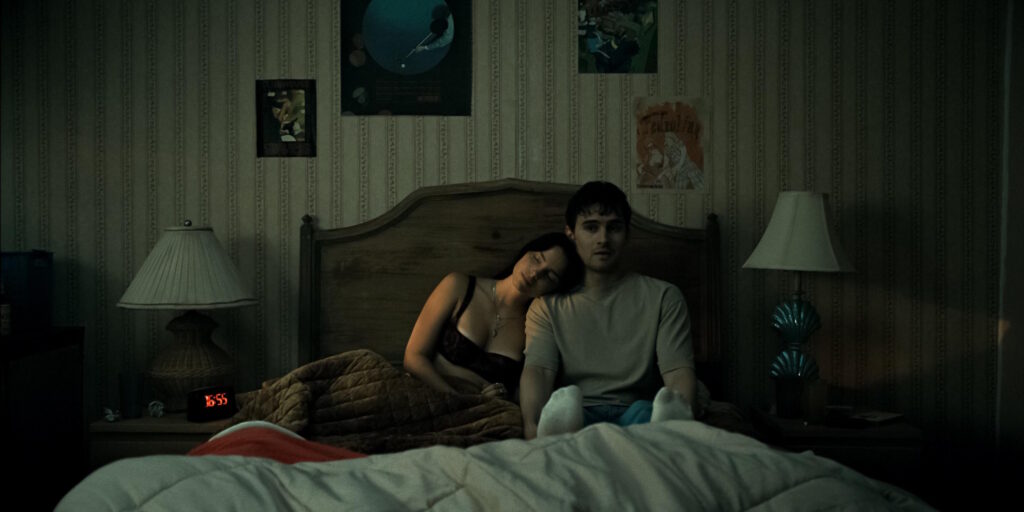
Taking out the S.T.A.R.S. spectacle and heavy franchise lore, Cregger’s Resident Evil is a lean, mean, 90-minute thrill ride that blends the horror of the games – inspired by the everyman perspective seen in entries like Biohazard and Requiem – and the horror auteur’s misanthropic nature. Just as the new film’s unlucky medical-courier protagonist, Bryan (Austin Abrams), is about to clock out for the night, he is tasked with making a quick trip to Raccoon City General Hospital. Promised double pay for the last-minute delivery, he agrees to the gig despite his planned talk with his girlfriend about an unexpected pregnancy, kicking off a journey through hell as he drives into a Raccoon City newly infested with the walking, mutating dead.
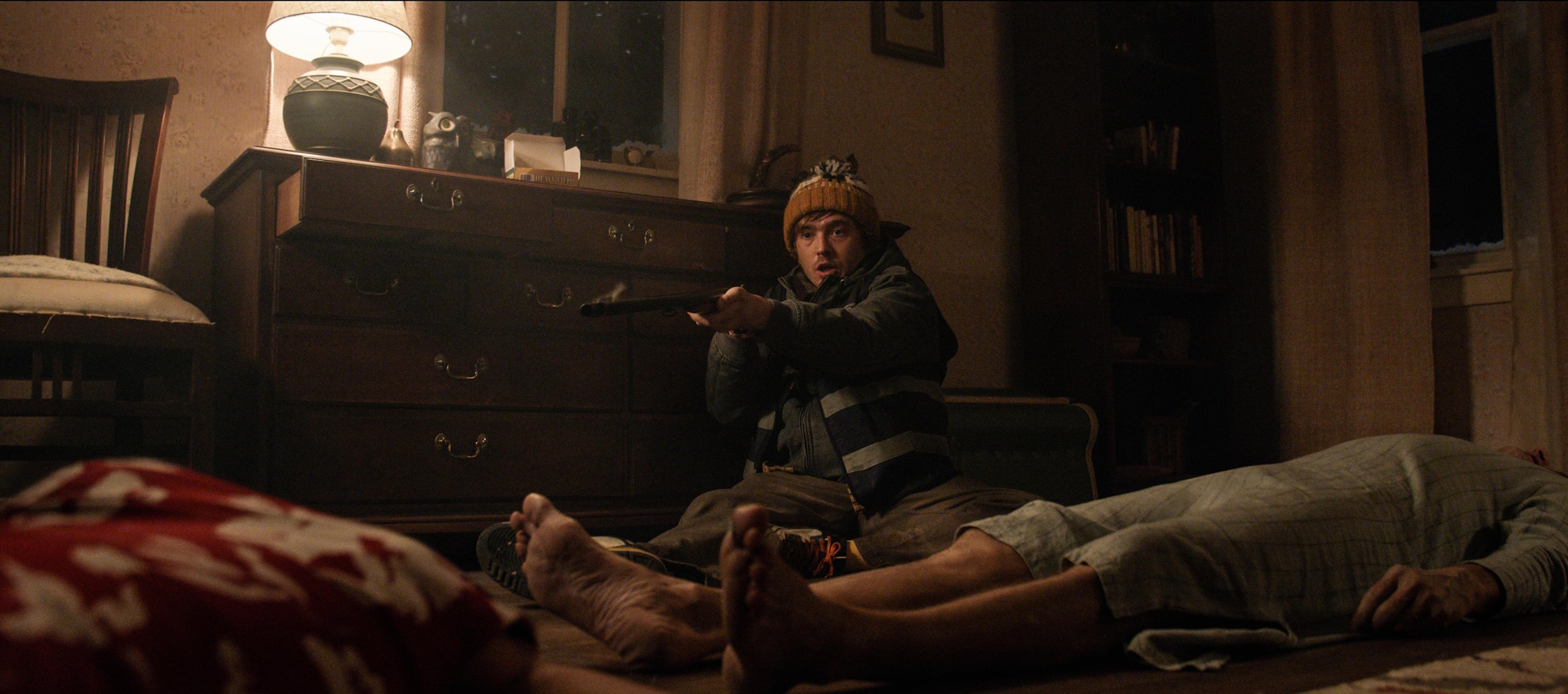
Kicking off its action when Bryan’s car accidentally hits a mysterious woman on a lonely, snowy road, Resident Evil quickly escalates into a bloody, chaotic nightmare that evokes the bad-to-worse nature of the games while still working as a self-contained zombie flick. As he follows the courier’s long, bad night, Cregger adds so many terrifying set-pieces and tentacled monsters that it adds a dose of comic cruelty to this tale of a guy just trying to do his job. Beyond delivering the thrills of his Raimi-adjacent rollercoaster, replete with jump-scares and gross-out extremity, Cregger also works to craft an experience that will be familiar to game-enjoyers. At times, Bryan becomes an avatar for the average Resident Evil player, crashing out over the absurd number of lock-and-key puzzles and going back and forth between completing his mission or nope-ing the hell out of a spooky dark corridor filled with dead bodies.
In this, the latest feature becomes the most self-aware of all Resident Evil films, noting the odd logic of the games through quick easter eggs or weapon upgrades. Miraculously, Cregger concocts a horror experience that works for non-fans by being an effectively fun zombie film while simultaneously playing into a subtler brand of fan service that reminds gamers what made the franchise fun in the first place. Despite the claims of skeptical fans – who have claimed that Cregger is cynically using their beloved IP to make a generic horror movie – the strategy of creating the equivalent of a DLC sidequest set in the world of Resident Evil proves that a video game film can be accurate in spirit without slavishly hewing to a 1-to-1 adaptation.
Beyond finally delivering a good Resident Evil movie, the for-hire project comfortably wriggles its way into Cregger’s wider filmography. Upping the ante in terms of style, the increased budget gives Pirates of the Caribbean cinematographer Dariusz Wolski the unhinged, frantic energy of constant camera pans and unnerving wide shots to make the ensuing carnage of the infected really pop. Returning to the pandemonium of Barbarian (thankfully ditching the restrained, deadly-serious camerawork of Weapons), Cregger applies that quality to a larger scale, giving viewers the spectacle of kamikaze zombies splattering around a terrified Bryan or multiple corpses combining into an unfathomable abomination.
Thematically, matching with Barbarian and Weapons’ anxieties over parenting children into a world that feels like it’s getting worse by the day, Bryan’s fear of fatherhood is thrown at him in a neurotic odyssey of reproductive horror. Constant reminders of children – including a sequence in a maternity ward featuring mutant babies – punctuate his unfortunate ordeal as he fights to stay alive in a city that is collapsing into the epicenter of a bloody apocalypse. Ironically, the hapless courier’s own fight for survival in a city of Lovecraftian beings ranging from workaday zombies to roly-poly monsters seemingly made out of legs, tentacles, and teeth brings about the doom that the nefarious Umbrella Corporation unsuccessfully tries to course-correct.
Cregger’s nihilistic outlook on humanity’s simultaneous aversion to progress and determination to fast-forward to it – a commentary linked to the games that sadly feels more prescient than ever with today’s technology – ends with both parties reaching their destination of destruction, either in the form of self-preservation or in the unabashed confidence to open Pandora’s Box and say screw the consequences. Much like Return of the Living Dead’s take on the zombie genre, Resident Evil’s sardonic horror-comedy of very bad decisions posits that one cannot undo what they accidentally release into the world. Ultimately, some wrong turns lead Bryan to the Bad Ending.
Despite any pretensions that may come from that conclusion, Cregger knows to keep it light. Avoiding the trap he fell into by making Weapons about something, his latest privileges the “genre delights first, themes later” dynamic that made Barbarian stand out amid the elevated horror trend. It may not be a lot to ask in a franchise that features boulder punching and Evil Knievel motorcycle jumps over skyscrapers, but the filmmaker’s strategy of implementing a small-scale, to-the-point haunted-house ride marks the closest anyone has ever gotten to making a true Resident Evil movie.
Resident Evil is now playing in theaters everywhere.