
If there’s one thing that Steven Spielberg continues to pursue throughout his career, it is the combination of the truth and the fantastical. Of course, he knows in reality these two modes cannot mesh, except in a medium that blends the fictional and the real. As The Fabelmans illustrated, he has been obsessed with the world hidden inside the square frames of celluloid since early childhood. He has been fascinated with cinema’s ability to blend reality and fiction, to create an illusion that doesn’t need to look real but feel real. Although, in his cinematic language, that intersection can only be expressed through spectacle.
Having learned from the catastrophic yet thrilling scene of a train crash in The Greatest Show on Earth, the New Hollywood director has taken that contrast of the horrible and the wondrous to new heights in his 50-year filmography. It is the spectacle of watching a shark eat a man alive; of an alien coming out of an incomprehensible spaceship; of an ominous, Old Testament power blowing up the heads of Nazis; of a Nazi toying with a Holocaust prisoner by pointing a jammed gun at her head before blowing her brains out; of a World War II soldier desperately reaching out for his obliterated leg on Omaha Beach; of a young child prisoner watching the bombing of Nagasaki happen hundreds of miles away, a brilliant light devastating an entire city; of the dissolution of his stand-in’s parents’ marriage in mid-20th-century American suburbia; of people getting vaporized by a malicious tripod; and of a T-Rex roaring its magnificent roar as it tries to devour two kids trapped in a car. He magically found a way to make these images both hold power while also entertaining, hitting a sweet spot between populist filmmaking and being a cinematic master, all while trying to reconcile with his idea of truth.
Alongside his journey, he has shown his other fixation that can only be communicated on screen: the extraterrestrial. Surprisingly, aliens have appeared as a constant in his works, albeit with ever-changing significance. His debut feature at 17 was his alien-abduction home movie Firelight, featuring aliens seeking to kidnap an entire town for a human zoo. He then evolved the concept into his Jaws follow-up, Close Encounters of the Third Kind, where the aliens appear as more benign beings that release their human hostages back to Earth. He then changed things up with the charmingly innocent E.T, who provides a boy in a broken home with a source of companionship and psychological connection. From there, it ebbs and flows. Spielberg sort of brings the benevolent aliens back 20 years later in his robotic Pinocchio tale, A.I. (this time they’re actually evolved, alien-esque androids). He then makes them antagonists again in his remake of War of the Worlds, characterizing them in his post-9/11 allegory as a foreign power made to remind America of its vulnerability – only to rework them into God-like beings in his fourth Indiana Jones movie. The last time Spielberg got to work with these mysterious morality-bending creatures from outer space was in producing J.J Abrams’ Super 8, which featured plot points taken from Firelight and an alien embittered by years of torture by the U.S government, ready to leave bodies in its wake as it fights its way home.
And yet, while giving aliens the chance to go all over the place in terms of dimension, his idea of truth has always remained rock solid. It can be seen in his historical dramas, either taken as literally as a national newspaper fighting and deciding to release its articles on The Pentagon Papers in The Post or in a metaphoric substitute for Justice. As seen in the likes of Schindler’s List, Amistad, and Minority Report, the truth will always come out; someone will realize the Nazis are bad and do something about it; someone will help bring to light the insidious nature of the institution of slavery; and the truth will come out that an omniscient police investigation system is secretly being used for corrupt means. However, in some of the examples listed above, Spielberg’s reveal of the truth can fall victim to tone-deaf means. His depiction of fascism and the Holocaust in Schindler’s List, a film considered his best work, has been criticized for turning said atrocity into a sick spectacle, into crafting scenes of torture and punishment with the same cinematic vocabulary as the nail-biting tension as Jaws, leaving audiences on the edge of their seats. In works like Amistad, his pursuit in underlining the unethical nature of the slave industry sidelines the central figures involved in the court case, having an uncomfortable similarity to the white-savior structure. (The same could be said of Schindler’s List, which features a war profiteer mythologized into a gentile savior, so as to not guilt audiences too much about the horrors of genocide.) And as underlined in Minority Report and all his other films, the unpleasantry is easily put aside. No matter how horrific the spectacle is, everything is put right. Justice is done, and everyone gets a happy ending.
The only occasions where he truly confronts his idea of truth is in two works: Munich and The Fabelmans. Munich’s moral muddiness emerges from Israel’s assassination operations in the aftermath of the Munich Olympics massacre, the slayings falling between the lines of deserved revenge or adding more fuel and rage to an undying fire. In Sammy Fabelman discovering cinema’s power to show objective truth while also distorting it to his own means, as seen in his discovery of his mother’s affair while going through footage of his family’s camping trip or his glorification of his anti-semitic bully in a film for his graduating class. The latter example can be applied to how Spielberg feels about aliens, applying them into whatever narrative he wants as a means to a metaphorical end. They can be genocidal or benevolent. The extraterrestrials, to Spielberg, are their own incomprehensible truth.
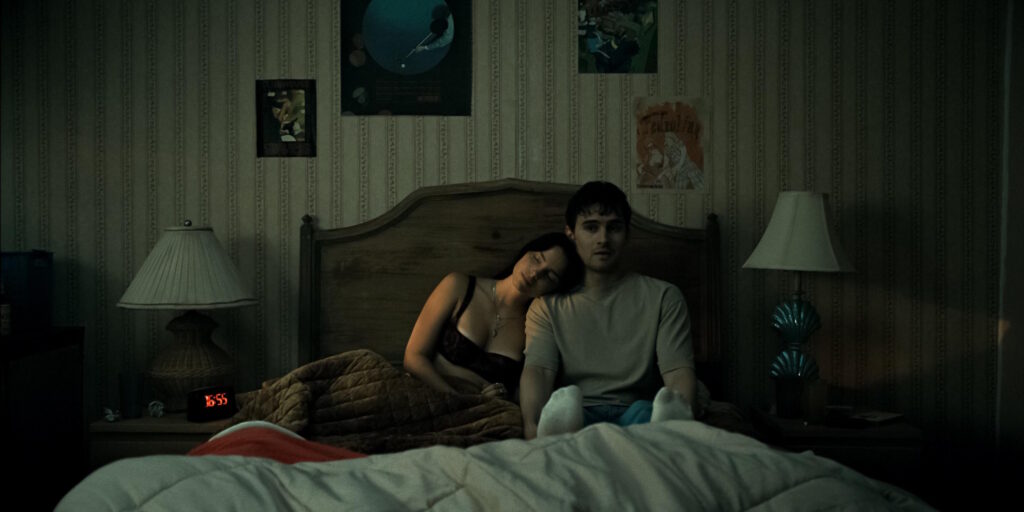
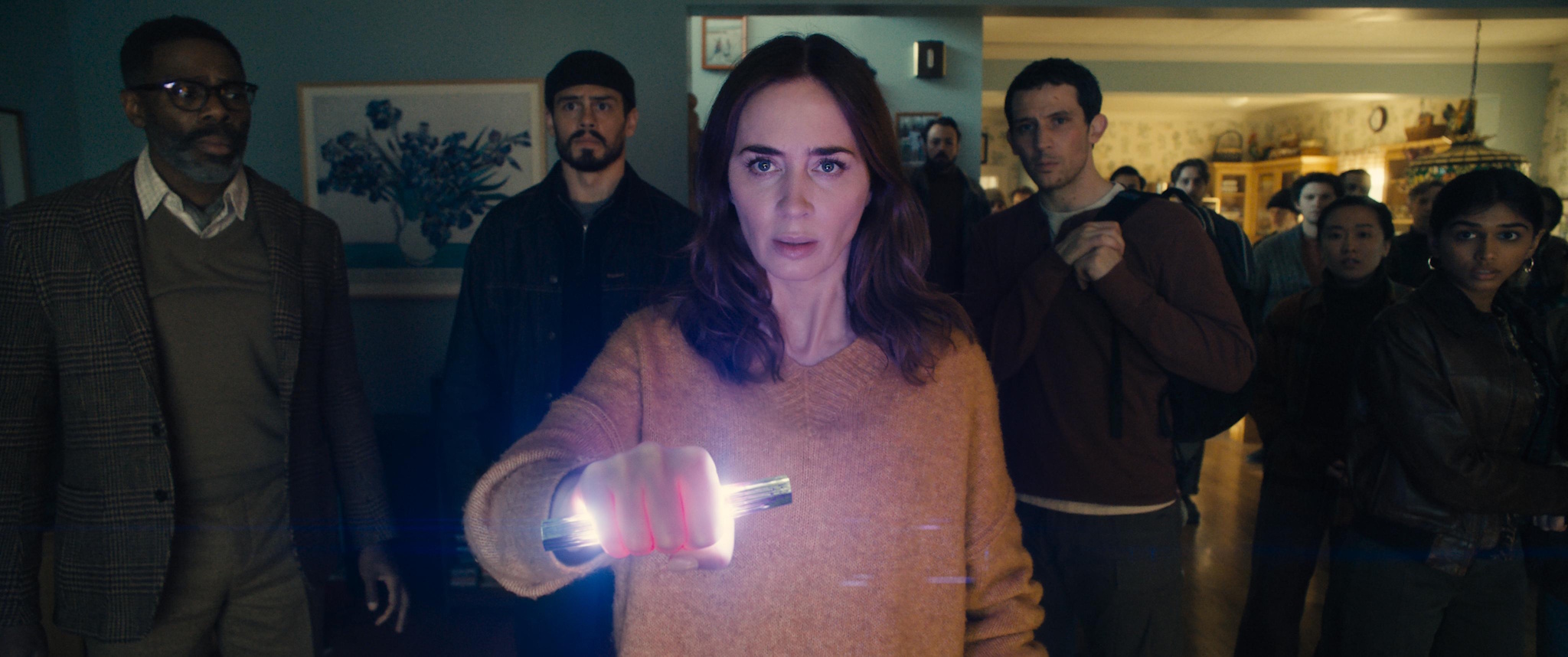
Which makes it interesting that, in the twilight years of his career, he only now tries to quell his belief in objective truth and the incomprehensible. With Disclosure Day, he aims to finally combine the two into a meaningful statement. The film’s story is consistent with his works involving someone setting things right: Whistleblower and cybersecurity specialist Dr. Daniel Kellner (Josh O’Connor) quits his job at Wardex, a security company secretly working as a government agency housing information on extraterrestrial lifeforms, and strikes the match for him and his conspirators’ plan to get the word out about the existence of aliens. However, in between the conspiracy chase thriller starring Daniel and his girlfriend/accomplice, Jane (Eve Hewson), as they are sought after by Wardex head Noah Scanlon (Colin Firth), the incomprehensible arises. In the midst of Scanlon’s defectors, led by disclosure activist Hugo Wakefield (Colman Dolmingo) trying to scrape together a plan for how exactly they’ll release this information without getting themselves killed, their key is revealed through meteorologist Margaret Fairchild (Emily Blunt).
While Margaret is working as a weatherwoman for a Kansas City news station, a cardinal landing in her apartment one morning lets loose a series of powers that were previously dormant within her. Suddenly she can read people’s thoughts and feelings, knowing enough of their background to give them the exact advice they need, as seen in her instinctually using this gift to get herself out of a speeding ticket, as if it were second nature. Suddenly she can fluently speak different languages that she never learned, or morph into different people in the eyes of others, or speak in a clicking alien language that only Daniel can understand through mathematical equations. Soon after an incident during a live broadcast, Margaret and Daniel feel intrinsically drawn to each other – both from the orders Wakefield gives them to rendezvous in the Midwest and from something akin to a higher calling. Or, as the film constantly posits, a leap of faith perhaps.
Margaret and Daniel act as Spielberg and writer David Koepp’s avatars for the concept of the objective and the esoteric, as one shares empathetic abilities powered by human emotion while the other is exceptionally skilled at mathematics. Though the gendering of the intelligent male and the understanding woman are clearly lined out, Spielberg and Koepp avoid the obvious angle of making the duo the Adam and Eve of an enlightened humanity and instead lean into something more unclear. As is humanity’s rationality for explaining the irrational, once others see Margaret as Christ, the meteorologist puts her foot down. She is not humanity’s savior, one that they so desperately need as the world is on the brink of World War III (an ongoing subplot happening in the background of TVs, news stations, and convenience-store lootings), and is instead a person. Though in the eye of Spielberg and the purpose of the plot in Disclosure Day, she may as well be a messiah.
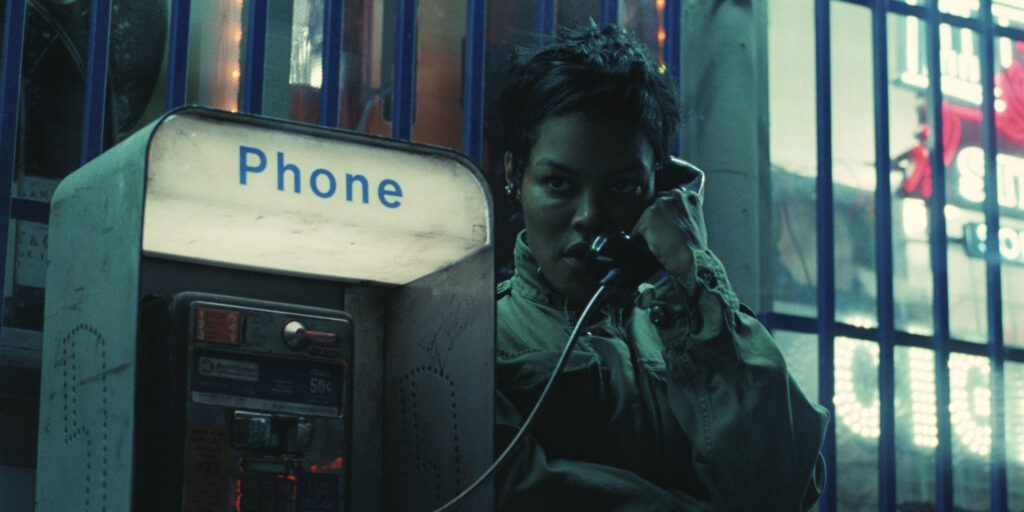
An ongoing conflict that the film peters in and out of is the idea of objective purpose and the self. Early on, at the beginning of their chase, Jane is caught in a battle of who she serves and who she is, both spiritually and literally. Using a device extracted from the aliens they captured and imprisoned, Scanlon uses its abilities to possess Jane, interrogating her whereabouts and removing her autonomy to initiate an assassination attempt on her boyfriend. Puppeteering her body, his role as the villain becomes apparent, but also provides a contrast to Jane’s internal struggle with her crisis in faith. Having dropped out of a religious order, her initial fears of the proof of aliens destroying people’s religious beliefs and creating mass chaos combines with her own insecurity in being a servant to God’s plan. A fascinating conflict, Jane’s character arc acts as foreshadowing for how Spielberg and Koepp see these unsettingly complicated questions. A phone call to her former Abbess Sister Maura (Elizabeth Marvel) resolves her existential questioning. As she states on the phone, God has to exist if there’s a universe vast enough for other beings to live in it, and instead of looking at this question with fear, embrace the comfort that humanity finally knows it is not alone.
This easy conclusion to her arc only maximizes as Disclosure Day reaches its bigger epiphany regarding what to do with the uncertainties of the universe and the self. It is revealed how Margaret and Daniel got their otherworldly powers, though it’s interesting to note how the film doles out this information. Recontextualizing an alien abduction so traumatic that it serves as a repressed memory for the both of them – Margaret only remembers it in fragmented nightmares about being taken to a “Hansel and Gretel house” – as a whimsical awakening soundtracked by John Williams, there is a space hidden within the narrative that Spielberg never pursues. Comparing the aliens and Scanlon, both hijack others’ bodies to nonconsensually suit their own needs, to say nothing of Wakefield replicating Margaret’s childhood home to trigger her undiscovered trauma for the sake of his own goal while advertising it as some sort of therapeutic healing. However, this reveals that Spielberg and Koepp regard the ends as justifying the means. It’s bad when Scanlon does it because he wants to withhold information, but Wakefield retraumatizing Margaret and Daniel to reveal they’re a part of a 30-year-old disclosure plan that they had no knowledge of (and did not consent to) is a good thing. It may be the Spielberg schmaltz that clouds the horror behind such a revelation, yet he has shown before he can pick out the artificiality in such dream scenarios (i.e., the power dynamic flipping between humans and robots in the ending of A.I., both parties ending up being made to serve a purpose that could only be superficially achieved). The tonal strangeness in his latest transforms it from a charmingly old-fashioned conspiracy thriller to a truth that can only be found in pure fantasy.
The ending to Disclosure Day, what the entire film has been building up to, is the moment Spielberg tries to combine truth with the incomprehensible, but only in the most flattening of ways. In the midst of the spectacle of everyone simultaneously watching broadcast footage of aliens on mainstream news channels, the holes are felt throughout. Everyone believes in this footage, which in reality would quickly be discredited as an AI-powered deepfake – though the throwaway scene of fact checkers in the news studio using a filter to dispute the potential fake footage puts a small bandage over the public’s potential to write their own claims. What’s more, it seems naive to insist that this revelation would potentially be enough to stop a world war and bring humanity together. Spielberg’s desperate plea to embrace the universe around becomes a mawkish exercise that would’ve worked great 30 years ago, at a time when it felt like the world could go in a better direction. As much as it would be nice to give in to Spielberg’s optimistic view of the world, the sad thing is that humanity is so jaded that the existence of aliens would only invite an indifferent shrug.
There is a certain outdatedness, from the treatment of some ethically questionable decisions and motives and its lackluster conclusion, that creates a fascination with Disclosure Day. It moves with the confidence of a mature filmmaker, gliding along on a popcorn thrill ride from the energy of Janusz Kamiński camera and Sarah Broshar’s editing. It is entertaining seeing Blunt get to be more wacky in her character’s unraveling in a memorably ambitious performance for the straightfaced actor, although O’Connor’s casting as the male Spielbergian hero doesn’t allow his typical vulnerability to shine through. However, with all that was promised, from its story and the culmination of his contrasting ideas finally clashing, there was a hope that Disclosure Day would reveal a catharsis that would shine bright not only among the summer blockbusters of 2026 but also in Spielberg’s filmography. Unfortunately for him, his art of the spectacle has caught up with him. The sentimentality may grab people’s attention, but his clashing of the truth and the incomprehensible reveals nothing.
Disclosure Day is now playing in theaters everywhere.