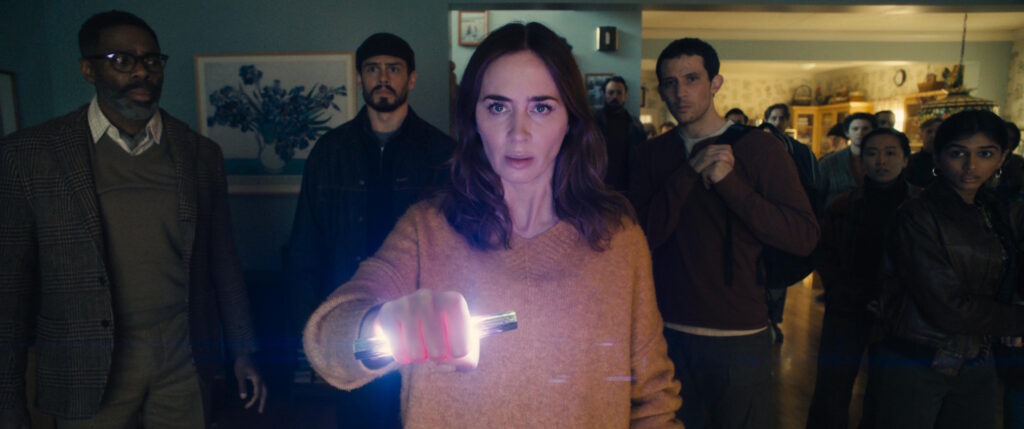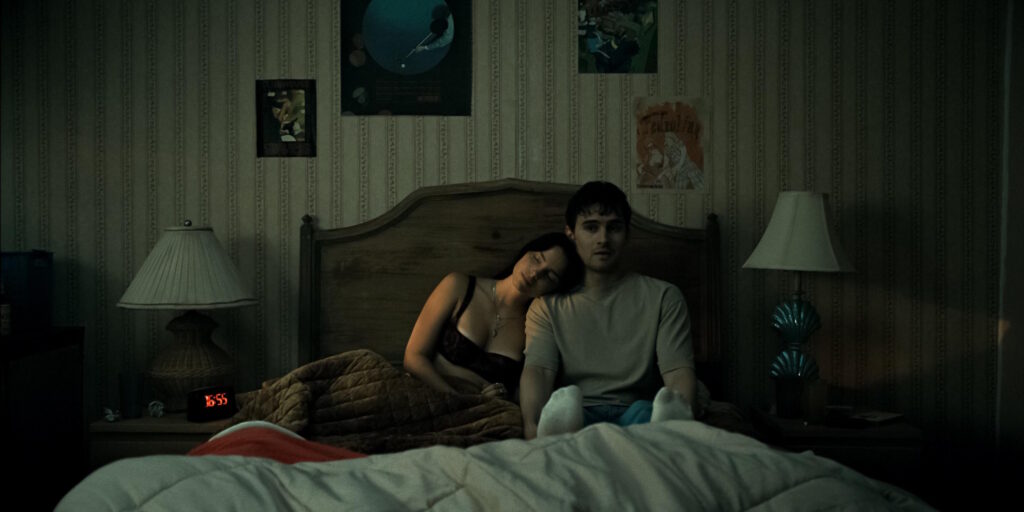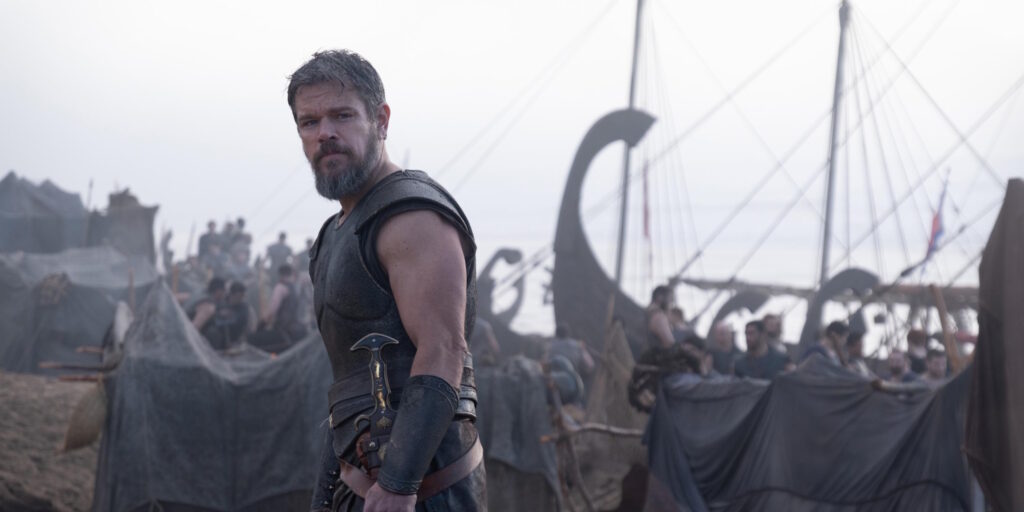

David Robert Mitchell doesn’t not owe us an apology. His break-out horror film, the soon-to-be-sequel-ed It Follows (2014), jangled a few keys, attached to a Rubik’s-cube keychain, in front of its impressionable viewers. Its unplaceable era reeked of aerosol hairspray (probably that purple one). The dreamy yet spiky synth score by Disasterpiece was peak John Carpenter. The group of teenage bike-riders at its center seemed like they might find E.T. hiding among Detroit’s forgotten industrial landscapes (but please not that guy).
He shouldn’t be too sorry, however. It Follows really works. For every logical loophole in it, the writer-director delivered set-pieces calibrated for maximum dread, including a couple so memorable they’re downright searing – not just due to their calibration but also the humanity and sincerity with which the film delivers them. David Robert Mitchell couldn’t have anticipated that Netflix and the Duffer Brothers were peering around the corner taking notes in illegible shorthand. Their Stranger Things series (2016-25) was a boon for the streaming platform and for millennials nostalgic for everything ’80s, apparently Amblin-starved after losing their DVDs of the 2002 CGI redux of Steven Spielberg’s E.T. (1982).
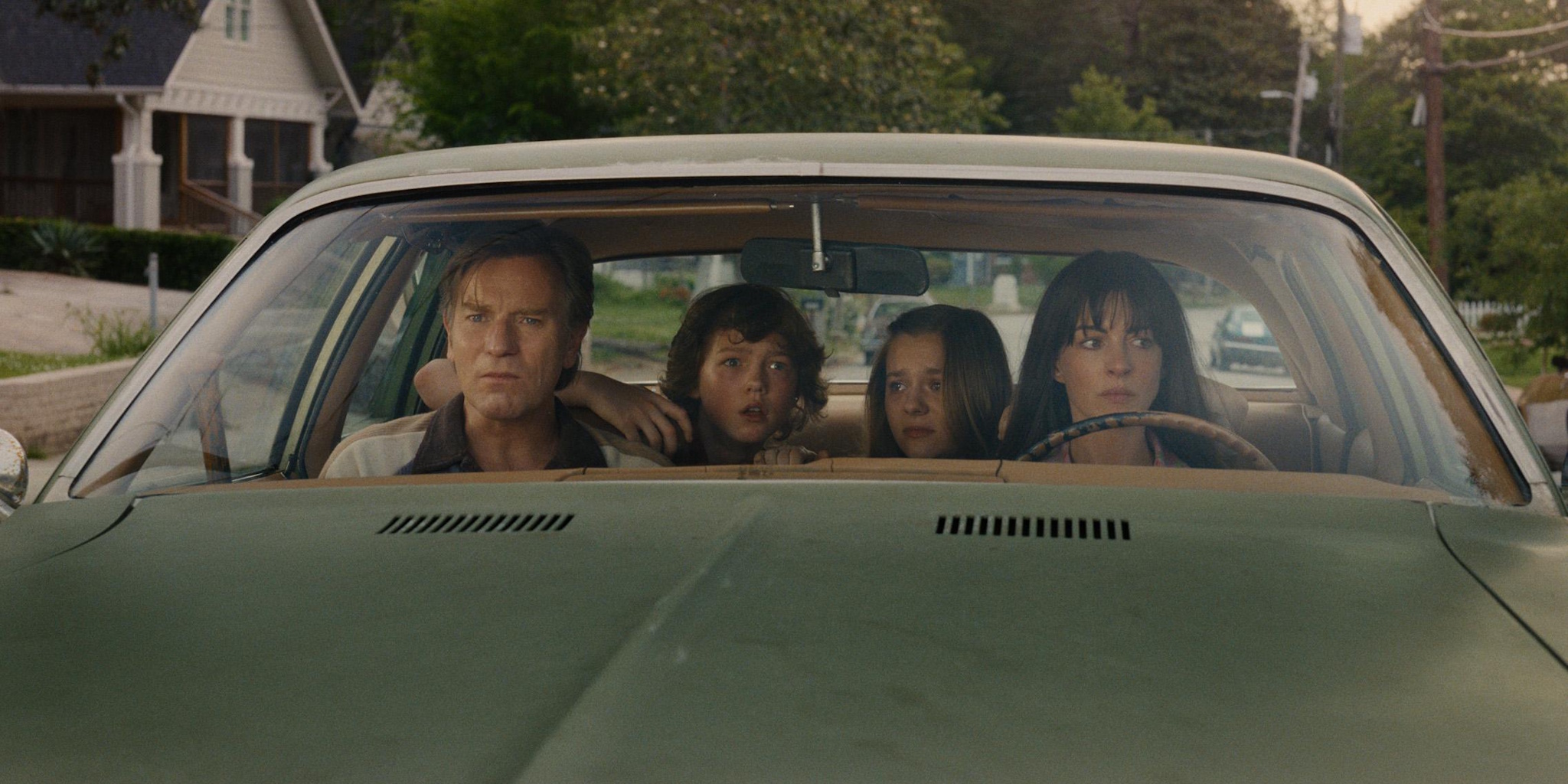
So when the Bad Robot production company logo appears before his latest film, The End of Oak Street, I sank into my seat. That’s the seal of the ultimate Spielberg mimic, Oak Street producer J.J. Abrams. Whether behind the camera or the keyboard, he misses more than he hits, and his 2011 film Super 8 was the real faux Amblin head start (albeit a pretty good one). Sure enough, there’s Denise (Anne Hathaway) and Greg Platt (Ewan McGregor) prepping burgers for their 1982 suburban block party, teen kids Audrey (Maisy Stella) and Brian (Christian Convery) totally gagging at their Boomer parents’ gee-whizness, and composer Michael Giacchino laying it on thick with his John Williams-esque syrup. There are even hints at Spielbergian themes when bad-dad Brian ditches the festivities to work, provoking a slight display of martial strife.
After a night of unusual meteorological activity, even stranger things occur. Pain-in-the-ass neighbor Mel (P.J. Jacobs) receives an appropriate gift in his backyard, one that resembles something Laura Dern inspects with a glove in Jurassic Park (1993). Widower Mrs. Huddleston (Anne Gee Byrd) has a backyard gift of her own in a plant Denise begins to suspect is prehistoric. There are two parallel mysteries at the center of Oak Street: What the fuck is happening on Oak Street, and what the fuck is David Robert Mitchell up to? This is from the man behind the Reddit/red-pill film noir epic Under the Silver Lake (2018), one whose surfaces have insofar contained multitudes, for better and worse. Here, the mise-en-scene is a little too hyped up on New Coke and Tab to be Just Another Spielbergian Adventure, with Mitchell’s camera more dexterous than before, his filmmaking even more economical, and our star performers particularly game to match this style.
Two mornings later, that previously roving camera hastens as something seemingly vicious chases David from behind the other side of a fence. Only the creature’s bobbing skull and taloned appendages hint at what’s behind the wooden planks before it bursts through to the other side. Somehow, it’s a Velociraptor. Jurassic Park is the main Spielberg hallmark here, of course, and The End of Oak Street fulfills a promise its Spielberg-directed sequel The Lost World (1997) and subsequent franchise entries have mostly only gestured toward: What if dinosaurs roamed the suburbs? The premise itself promises delightfully incongruous visuals, and Mitchell doesn’t waste the opportunity. There are looming Velociraptor shadows against picket fences, pterodactyls scooping up neighbors from their front porches, amphibious creatures occupying above-ground pools, and other absurdities.
As the Platt clan regroups inside their wood-paneled living room, Mitchell provides a clue to his raison d’etre for this Amblin-ish tale. Carl Sagan fan Audrey suggests that holes in time and space might have caused a time-and-space swap, allowing the prehistoric age to cohabitate with the Reagan era. Instead of a character looking up in awe as the camera slowly tracks into their amazement, Mitchell deploys a split-diopter shot giving cause and effect equal weight in a single static shot.
To be reductive regarding two of the great living filmmakers, the former is the Steven Spielberg Shot, and the latter is the trademark of Brian De Palma. Similar to the work of “Red Period” De Palma making political satires in the guise of Hitchcockian thrillers, The End of Oak Street uses the style and language of Spielberg to both appreciate and deconstruct the filmmaker, his audience, and the relationship between the two. (Perhaps the lineage is highlighted even better when Hitchcock gets his nod via a hungry pterodactyl shooing away a flock of crows pecking at a corpse.)
Perhaps logically, the first Jurassic Park is an expertly engineered theme-park ride, and one of the most thrilling examples of the form that Hollywood has ever mounted. (There’s a reason all these filmmaker dudes want to be its maker and have possibly only ever seen movies by him.) Oak Street understands that construction but isn’t looking to duplicate the peaks and valleys of its influence. Instead, Mitchell presents sneeringly funny and gleeful chaos that is nevertheless a thrill ride. However, Spielberg’s ride is comparatively safe. The Brontosaurus moment here involves a less family-friendly bodily function than a sneeze. The main Tyrannosaurus rex meal isn’t an annoying lawyer getting snatched from a toilet, but a key character who receives a slow mauling as onlookers witness the gory show while frozen in traumatic shock.
Thankfully, the Sagan-inspired MacGuffin isn’t overexplained or overexplored as it might be in, say, a more recent Speilberg film. The science function does provide a set-up for Mitchell’s final punchline, an ironic saccharine-soaked ending that would make De Palma (or even Douglas Sirk) envious. A straightforward read would see everything in its right place, at least in the places where Spielberg and his ilk have often taught us things should be. What’s just out of the frame suggests something popcorn fare rarely does. Although the beasts have razor-sharp jaws, people also have destructive weapons as simple as ignorance – and without the self-awareness contained within The End of Oak Street.
The End of Oak Street opens in theaters everywhere on Friday, Aug. 14.