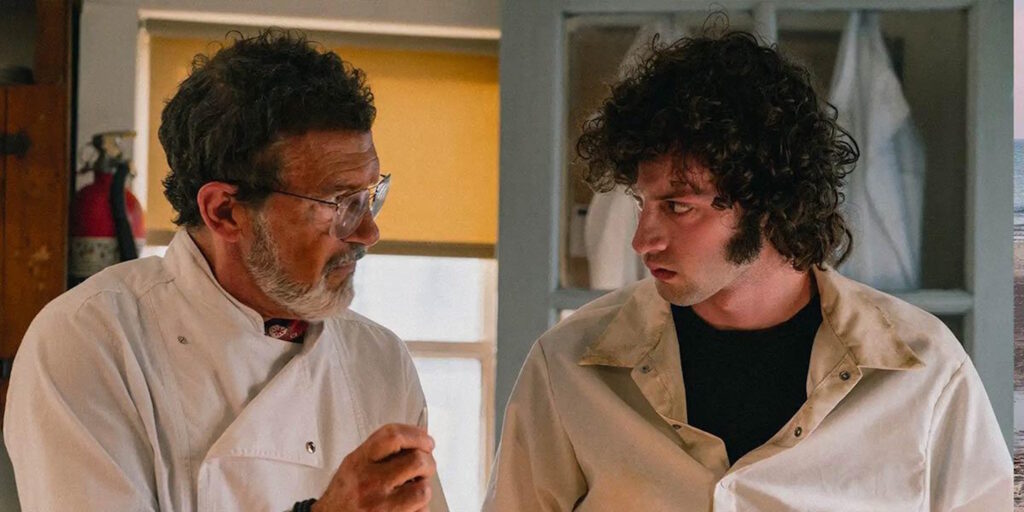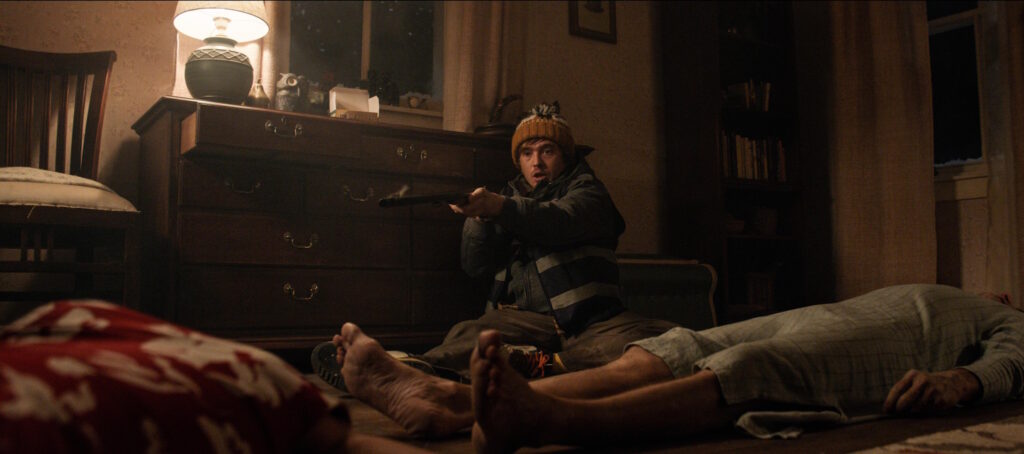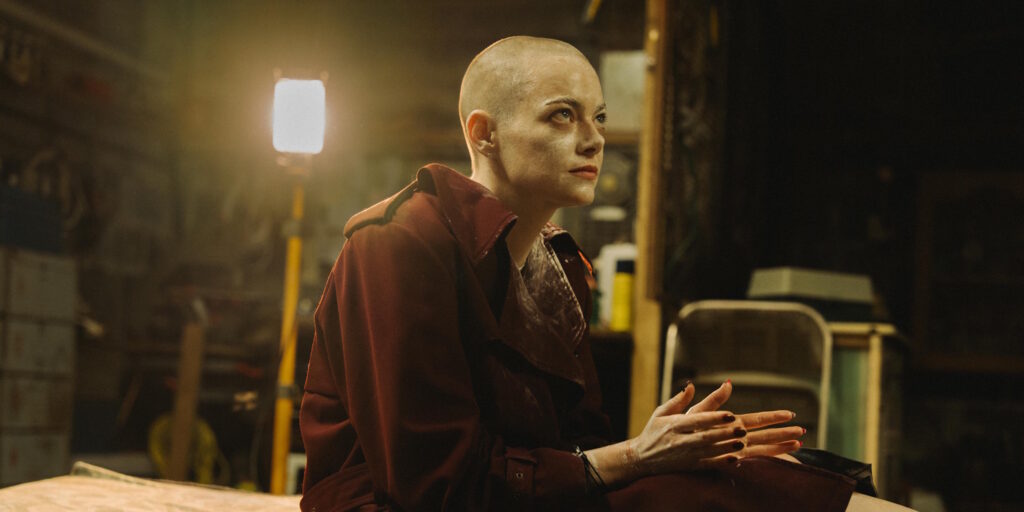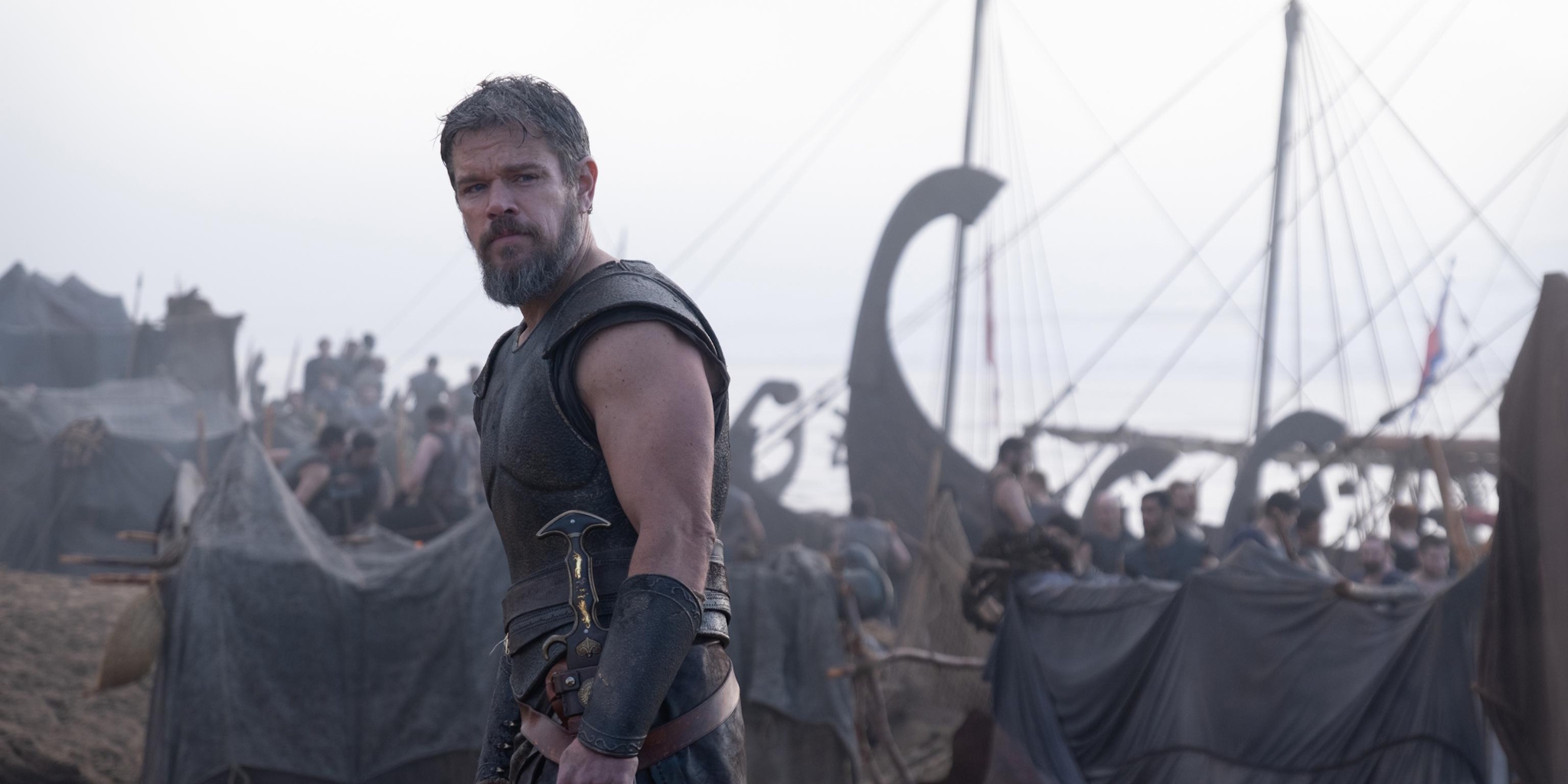

With a filmography full of deconstructions of Great Men – whether they came from the pages of a comic book or have influenced geopolitical conflicts for the past century – it was inevitable for Christopher Nolan to eventually tackle The Odyssey. Given that the director considers Homer’s epic poem fundamental to modern storytelling, it makes sense that he threw himself into creating an adaptation of it once Oppenheimer’s critical and box-office success gave him the leeway to make a $250 million swords-and-sandals-and-monsters epic. And with this returned assurance and blank-check privilege, Nolan showcases his talents and maturity as a filmmaker after a few years of doubt and experimentation.
Working with the same non-chronological timelines, The Odyssey provides a vast improvement from the weightless franticness of Oppenheimer. Following a similar structure to the original text, the main journey of The Odyssey is told in flashback, pulling together recollections of various characters as they try to answer the one question their stories cannot: Despite all that’s happened, will Odysseus (Matt Damon) finally reach his home of Ithaca?
This question holds variable meaning to those that ask it. For Telemachus (Tom Holland), it’s to wonder if he will ever be able to meet his father and finally get rid of the suitors, led by the two-faced Antinous (Robert Pattinson), who have been harassing him and his mother for several years. For Penelope (Anne Hathaway), it’s a blind hope to see her husband again after he was unfairly sent off to war because of Agamemnon (Ben Safdie)’s threat to disrupt Ithaca’s trade routes – a journey from which Odysseus still has not returned after 20 years. For Eumaeus (John Leguizamo), it’s a faith that the wave of evil that has spread across Ithaca ever since his master left will dissipate, a yearning for the heroic man to return and set things right. Odysseus himself, trapped on Calypso (Charlize Theron)’s island and fed a diet of memory-fraying lotus, questions if the horror and violence he inflicted during the Trojan War has made him unworthy of returning to his peaceful home. Suddenly, Nolan’s time-hopping structure, alongside Jennifer Lame’s editing displaying an improved rhythm, shows a never-ending tension as each character ponders if anything will ever be right in the world again.
Integrating various translations and theories surrounding The Odyssey, most notably Emily Wilson’s 2017 modernization of the ideas behind Homer’s poem, Nolan creates an introspective version of the ancient epic, reforming the work into a story of redemption while still being one of the biggest epics any director has made in the past decade. Shot entirely on an IMAX camera by Nolan regular Hoyte van Hoytema on various locations around the world, Nolan’s big-budget ambitions pay off, providing a massive scale of wonder to a story told across history while also lending it a universality. Starring a multicultural cast, the writer-director’s reiteration gives a global view of The Odyssey; the story is still Greek, but its background as a legend told and studied in various cultures has prompted Nolan to make his version a representation of humanity’s shared reality.
It’s that universality that makes Nolan’s idea of The Odyssey work in its broadness. Unlike the scattered density of Oppenheimer, the film doesn’t bog itself down in intricacies. The new film’s anachronistic costume design, use of modern dialect, and cavalcade of famous faces only harken back to the self-reflective center that interests Nolan, while spinning an engaging story for general audiences. He keeps things entertaining with grand spectacle and action, but The Odyssey allows Nolan to tap into some light genre trappings to evoke some dread in this story about people being forcibly reminded how feeble they are in the grand scheme of things.
The logic of The Odyssey, as Nolan brings to the surface, is cause and effect. It’s hard to pinpoint where the Original Sin in Nolan’s script lies. Was it when Sinon (Elliot Page) was manipulated by a young Antinous to take his place in the Trojan War (all approved by Odysseus so as not to embarrass the future suitor’s father). Or was it when the soldier was unknowingly sacrificed by his general to set the Trojan Horse in motion? Or when Ithaca’s hero kick-started the brutal sacking of Troy? Regardless, it has all built up to a grueling journey of karma that knocks Odysseus and his men off their high horse and into a world of peril and doubt.
The challenges they face reflect their misdeeds, from being treated like ants by the gigantic Cyclops (brought to life to Harryhausen-like effect, its uncanny mix of human actor and puppetry making for some freaky magical realism) to exploiting the niceties of Zeus’ Law – a recurring motif and one of the many pure things perverted by the Trojan War – and getting their comeuppance from the witch Circe (played with an empathetic touch by Samantha Morton). Meanwhile, the gods watching over this drama are more subtle but omnipresent, appearing via the winds of the sea or the storms from the sky. Nolan places the audience alongside Odysseus’ men, who know they are being punished but not exactly sure why.
The only deity who gives them mercy and direction is Athena (Zendaya), appearing to Odysseus from time to time, chastising him over his decisions while leading him toward the destiny he must embrace. Although other figures in the Trojan War such as Agamemmnon or Odysseus’ men were killed in retribution, the gods see a spark of redemption in the man who is deeply troubled over his actions, including failing to prevent his men from entering the underworld of Erebus. They gods just have to wait out 20 years (or in the audience’s case, three hours) for him to fully understand and accept it.
For the last act of The Odyssey, Nolan takes some notes from his previous work to bring an emotional catharsis to his depiction of Odysseus’ return. All the setups he interspersed in his script pay off, his long builtup toward a Dark Knight Rises-style fight between redeemed good and unrepentant evil gives way to an intense sequence scored with the unrelenting drum beats of Ludwig Göransson’s score (another improvement from the more distracting soundtrack of Oppenheimer). Despite any previous missteps he may have taken in his directing, such as his blunt-force storytelling and his own self-importance getting in the way of nuance, Nolan has managed to transcend his flaws and make it work. The Odyssey was meant to be a poem sung to the masses; Nolan applies that idea to a modernized lens and ends up making what might live on to be one of his best.
Although some critics have contended that Oppenheimer is Nolan’s most self-reflective film – sharing the pessimistic outlook of a creator realizing too late what their ugly creation has done to the world – The Odyssey, despite its brutality and skepticism, concludes with faith. Beyond its admittedly conservative One-Man-Will-Purify-the-World-of-Evil belief, carried through the ages by Homer’s work, Nolan’s ultimate hope is that one day, the stories to which humanity clings will inspire a better world. It may shift and change throughout time, carry on slightly different meanings as it goes through assessment and translation and analysis, but it will still carry an enduring truth, to uphold virtue and prevent the easy slip into wickedness. Zeus’ Law may be a precautionary measure to prevent being smited by the gods, but it’s also a way to instill hospitality and courtesy toward other strangers. By breaking it, one damns the world.
The Odyssey is now playing in theaters everywhere.